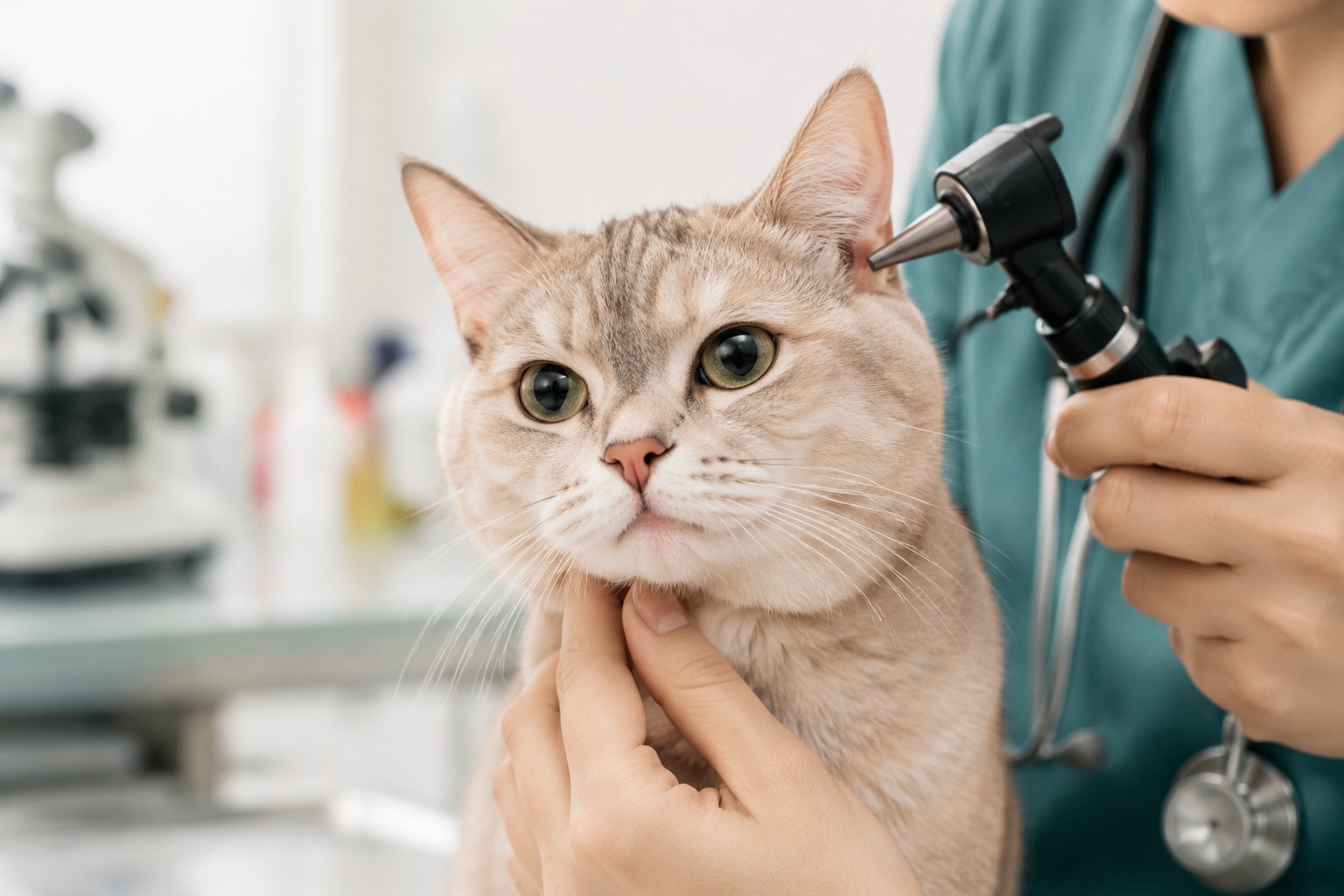
Educational pet-health and visit-preparation reference. Not a diagnosis, prescription, dosage recommendation or substitute for a veterinarian.
Care & observations
- Prevent rubbing with a recovery collar if available and safe; keep the pet calm and avoid bright light if it seems painful.
- Gently wipe discharge from the surrounding fur with clean damp gauze; avoid pressing on the eyeball.
- Take a clear photo before the visit if the pet is calm, and note whether vision, pupil size, or pain changed suddenly.
Seek veterinary care now
- Squinting, keeping the eye closed, eye trauma, chemical exposure, cloudiness, bulging eye, sudden vision loss, blood, or severe swelling.
- A cat or dog is rubbing the eye intensely, cannot open it, or the eye changes over hours.
Contact your veterinarian soon
- Mild redness, tearing, or discharge that persists, recurs, affects both eyes, or appears with sneezing, coughing, or skin disease.
What to avoid
- Do not use leftover eye drops, steroid drops, human eye medicine, essential oils, or home rinses unless a veterinarian prescribed them for this episode.
- Do not try to remove an embedded object or apply pressure to a painful or injured eye.
MAKE YOUR OBSERVATIONS USEFUL
Bring a clear timeline to your vet
For the changes covered in this guide, note when they started, how often they happen, whether they are worsening and how they differ from your pet’s usual routine. List recent diet changes, medicines, travel or possible ingestion in time order. Add photos or a short video only when it is safe and will not delay care.
Open local health recordsSources & editorial context
- Merck Veterinary Manual: When to See a Veterinarian ↗Merck Veterinary Manual
- VCA Know Your Pet ↗VCA Animal Hospitals
- AVMA Pet Owner Resources ↗American Veterinary Medical Association
Migrated from the Pet Vet Reference project with its bilingual content preserved. Cited organizations provide background resources and do not endorse this site. Source-based compilation is not individual clinical review; this page does not claim veterinarian sign-off.
Read our editorial policy