Educational pet-health and visit-preparation reference. Not a diagnosis, prescription, dosage recommendation or substitute for a veterinarian. Veterinary review: pending. This is an editorial educational reference. Checking sources is not a veterinary assessment of your pet.
Limit jumping, running and stairs first
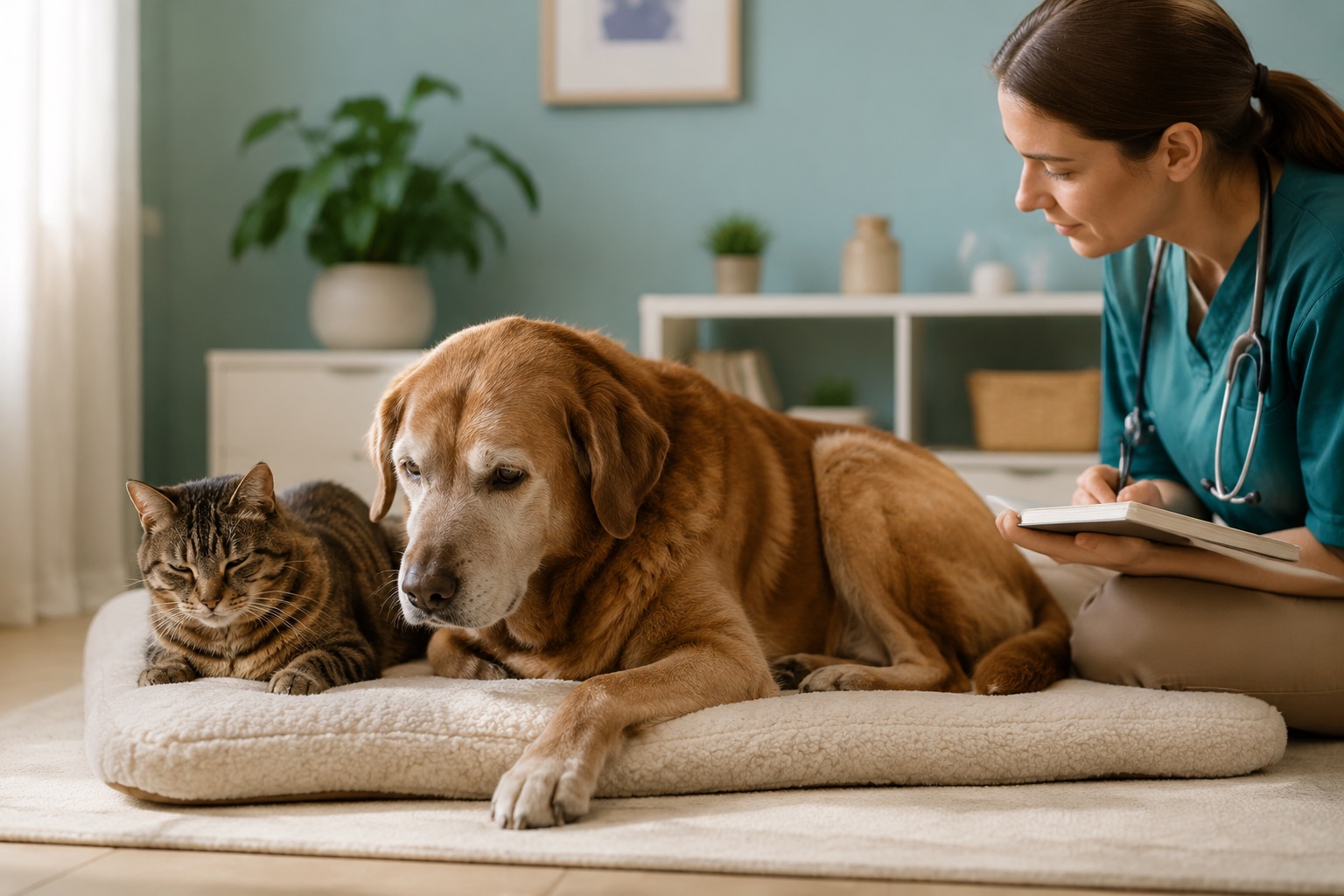
Use a non-slip rest area and short necessary leash trips. Do not test the leg with jumps, long walks or repeated stairs; offer a low-entry box and nearby food and water for cats.
Section sources: AAHA senior care: Pain and home environment
Record the limb, timing and weight-bearing
Record a natural walking clip and note whether it worsens after activity or rest, with paw injury, swelling, heat or pain. Avoid only writing “walking bad” and do not force-touch a painful area.
Section sources: AAHA senior care: Pain and home environment · AAHA: Preparing for a successful veterinary visit
Non-weight-bearing, major trauma or severe pain needs prompt care
Contact a clinic immediately for sudden inability to stand, non-weight-bearing, abnormal limb angle, open wound, marked swelling or heat, cold pale toes, collapse or breathing change. Recurrent stable lameness still needs an appointment.
Section sources: Merck Veterinary Manual: When to see a veterinarian
Bring video, activity history and medicines
Bring video, preceding exercise or jump, paw trimming, orthopedic history and all medicines. Do not give human pain medicine or restart an old prescription on your own.
Section sources: AAHA: Preparing for a successful veterinary visit
Use this guide to prepare for a visit
Lameness note Limb/onset: Weight-bearing: Before/after activity: Swelling/wound/pain: Video and medicines: Question for the clinic:
Record observations for this topic Visit checklistSources & editorial context
- AAHA senior care: Pain and home environment ↗American Animal Hospital Association · Editorial check: 2026-10-12 · Source date: 2022-12-13
Behavior change, home video, mobility support and environmental changes; part of the 2023 guidelines. - Merck Veterinary Manual: When to see a veterinarian ↗Merck Veterinary Manual · Editorial check: 2026-10-12 · Source date: Not clearly stated on source
Urgent signs including breathing difficulty, collapse, severe pain, bleeding, seizures and difficulty urinating. - AAHA: Preparing for a successful veterinary visit ↗American Animal Hospital Association · Editorial check: 2026-10-12 · Source date: 2026-02-10
Carrier preparation for cats, species-specific visit preparation and discussion of fear or anxiety.
What changed
Rebuilt around activity limits, weight-bearing records, trauma red flags and handover.
Dates identify editorial updates and source checks, not clinical approval. All four languages were edited together; native-language and veterinary review remain pending.
Read our editorial policy