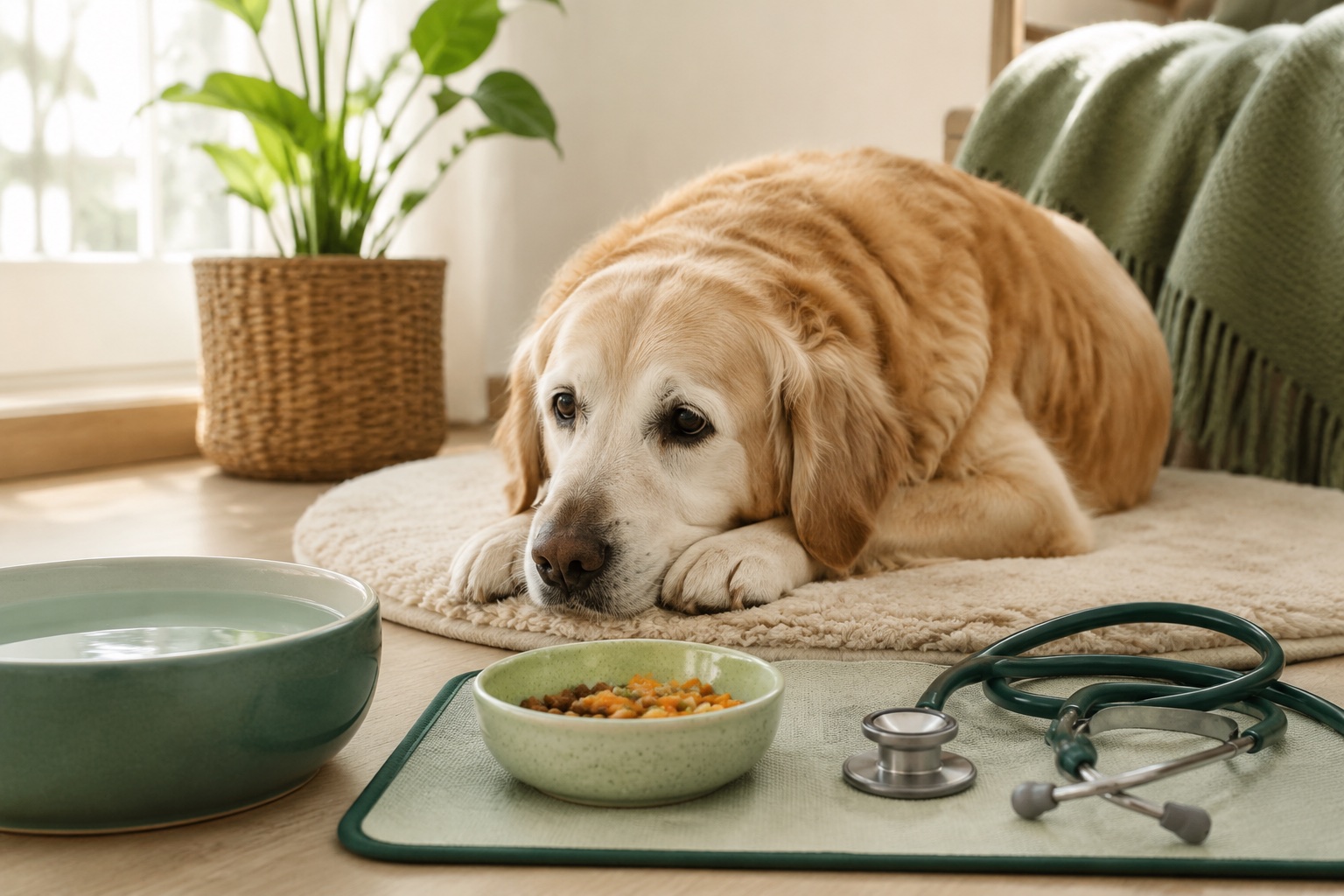
Educational pet-health and visit-preparation reference. Not a diagnosis, prescription, dosage recommendation or substitute for a veterinarian. Veterinary review: pending. This is an editorial educational reference. Checking sources is not a veterinary assessment of your pet.
Turn “not eating” into a usable record
Record the last normal meal, actual bites or approximate amount, wet-food or treat interest, water and urination. A cat may approach the bowl and leave; a dog may choose only soft food. Do not label a new change as pickiness.
Section sources: AAHA: Preparing for a successful veterinary visit
Record vomiting, stool, pain and urine on the same timeline
Put temperature only if the clinic asks and it is safe, plus vomiting count, diarrhea, painful posture, hiding, mouth pain, stool and urine on one timeline. Appetite loss with increased drinking, little or no urine, repeated vomiting, marked pain or breathing change should not be managed only by changing food at home.
Section sources: Merck Veterinary Manual: When to see a veterinarian
Young, senior or completely non-eating pets need faster advice
Contact the clinic sooner for a young or senior pet, a pet with diabetes or another chronic disease, or one refusing both food and water. Collapse, severe weakness, pale gums, a swollen painful belly, blood, repeated vomiting, inability to urinate or breathing trouble is an emergency.
Section sources: Merck Veterinary Manual: When to see a veterinarian
Bring food, medicine and the full timeline
Bring food packaging, treat and supplement names, medicine list, weight trend, photos or videos, and what the pet can still do and when it worsened. Do not cycle through many foods or give anti-nausea or pain medicine on your own before the visit.
Section sources: AAHA: Preparing for a successful veterinary visit
Use this guide to prepare for a visit
Appetite and energy note Last normal meal: Actual intake/water: Vomiting/stool/urine: Pain or hiding: Weight and medicines: Question for the clinic:
Record observations for this topic Visit checklistSources & editorial context
- Merck Veterinary Manual: When to see a veterinarian ↗Merck Veterinary Manual · Editorial check: 2026-10-12 · Source date: Not clearly stated on source
Urgent signs including breathing difficulty, collapse, severe pain, bleeding, seizures and difficulty urinating. - AAHA: Preparing for a successful veterinary visit ↗American Animal Hospital Association · Editorial check: 2026-10-12 · Source date: 2026-02-10
Carrier preparation for cats, species-specific visit preparation and discussion of fear or anxiety.
What changed
Rebuilt around actual intake and associated signs, species differences, chronic and age risk, and visit handover.
Dates identify editorial updates and source checks, not clinical approval. All four languages were edited together; native-language and veterinary review remain pending.
Read our editorial policy