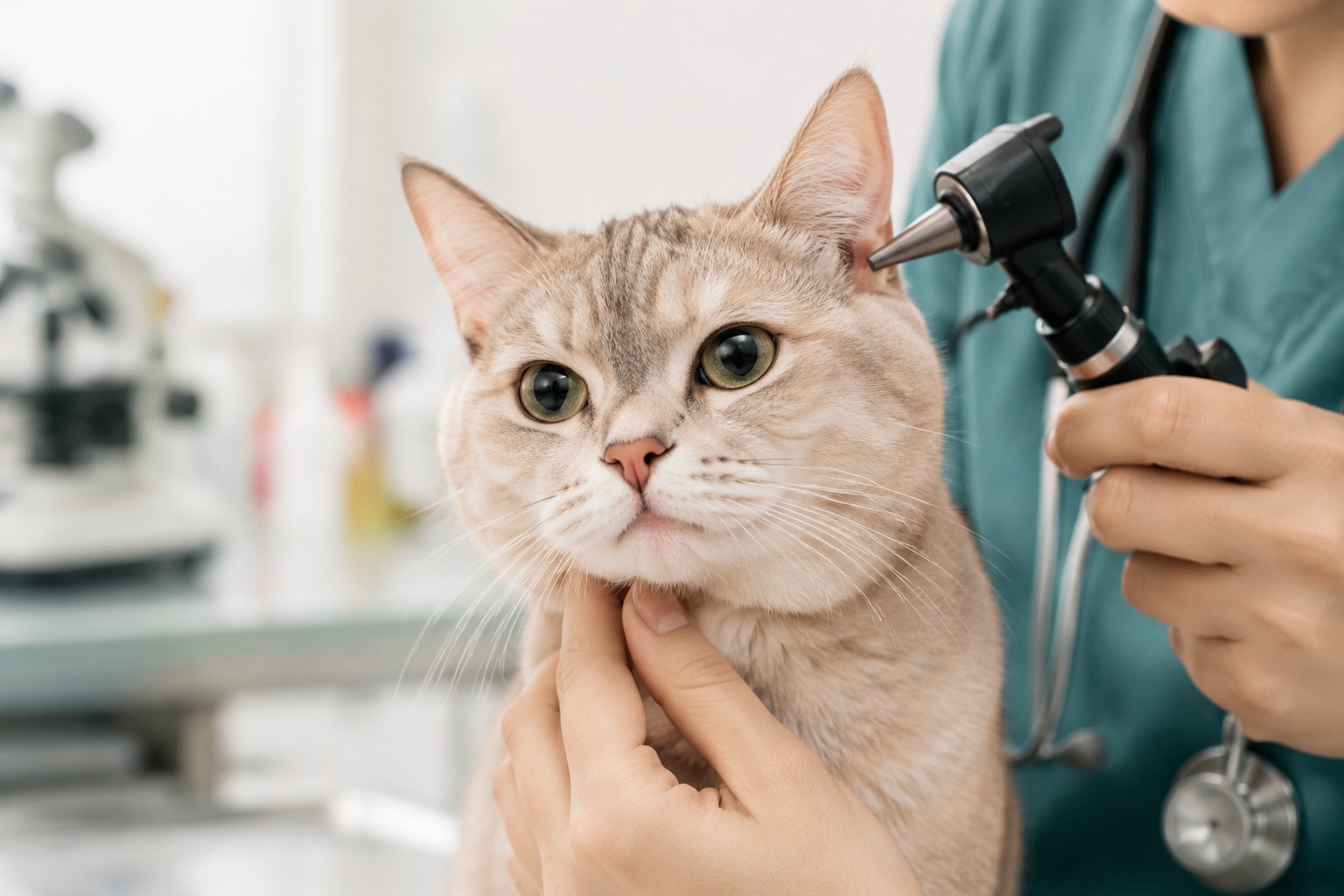
Educational pet-health and visit-preparation reference. Not a diagnosis, prescription, dosage recommendation or substitute for a veterinarian.
Care & observations
- Keep ears dry and prevent scratching damage while waiting for an appointment; use a recovery collar if needed and tolerated.
- If your veterinarian previously taught safe cleaning for this pet, use only the recommended cleaner and avoid deep insertion.
- Record onset, odor, discharge color, swimming, grooming, allergy history, and any products already used.
Seek veterinary care now
- Head tilt, loss of balance, severe pain, bleeding, swollen ear flap, sudden hearing change, facial droop, or ear trauma.
Contact your veterinarian soon
- Odor, discharge, redness, head shaking, scratching, recurrent ear problems, or discomfort lasting more than a brief mild episode.
- A puppy, kitten, senior pet, diabetic pet, or pet with allergies develops ear signs.
What to avoid
- Do not use cotton swabs deep in the ear canal, hydrogen peroxide, alcohol, vinegar mixes, essential oils, or leftover medicated drops.
- Do not assume all ear itching is mites; treatment depends on what the veterinarian finds.
MAKE YOUR OBSERVATIONS USEFUL
Bring a clear timeline to your vet
For the changes covered in this guide, note when they started, how often they happen, whether they are worsening and how they differ from your pet’s usual routine. List recent diet changes, medicines, travel or possible ingestion in time order. Add photos or a short video only when it is safe and will not delay care.
Open local health recordsSources & editorial context
- VCA Know Your Pet ↗VCA Animal Hospitals
- Merck Veterinary Manual: When to See a Veterinarian ↗Merck Veterinary Manual
- AAHA Clinical Practice Guidelines ↗American Animal Hospital Association
Migrated from the Pet Vet Reference project with its bilingual content preserved. Cited organizations provide background resources and do not endorse this site. Source-based compilation is not individual clinical review; this page does not claim veterinarian sign-off.
Read our editorial policy