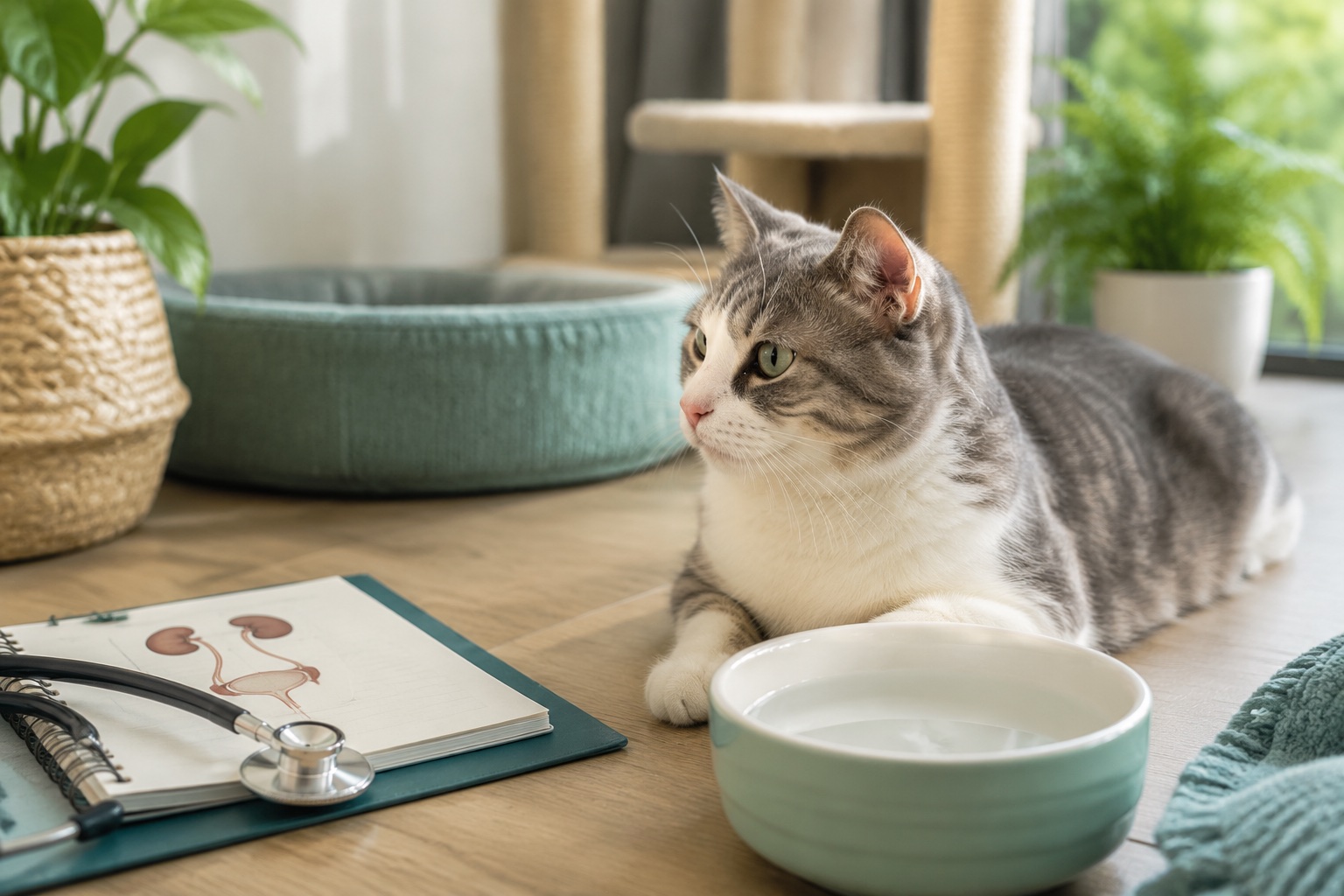
Educational pet-health and visit-preparation reference. Not a diagnosis, prescription, dosage recommendation or substitute for a veterinarian.
Care & observations
- Keep fresh water available, measure food intake, and weigh the pet regularly without restricting water.
- Bring prior bloodwork, urine tests, blood pressure notes, medications, diet names, supplements, and toxin exposure history.
- For senior pets, schedule wellness checks when trends change rather than waiting for severe symptoms.
Seek veterinary care now
- Known or suspected kidney patient with repeated vomiting, collapse, severe weakness, no appetite, trouble breathing, inability to urinate, or suspected toxin exposure.
Contact your veterinarian soon
- Persistent increased thirst or urination, gradual weight loss, recurring vomiting, appetite decline, bad breath, constipation, or senior pet trend changes.
- Before starting kidney diets, supplements, antacids, appetite aids, or fluid decisions without a veterinary plan.
What to avoid
- Do not restrict water because the pet is urinating more.
- Do not give human pain relievers, leftover antibiotics, or supplements as a substitute for kidney evaluation.
MAKE YOUR OBSERVATIONS USEFUL
Bring a clear timeline to your vet
For the changes covered in this guide, note when they started, how often they happen, whether they are worsening and how they differ from your pet’s usual routine. List recent diet changes, medicines, travel or possible ingestion in time order. Add photos or a short video only when it is safe and will not delay care.
Open local health recordsSources & editorial context
- Cornell Feline Health Center ↗Cornell University College of Veterinary Medicine
- Merck Veterinary Manual: Pet Owners Overview ↗Merck Veterinary Manual
- ACVIM Specialist Resources ↗American College of Veterinary Internal Medicine
- VCA Know Your Pet ↗VCA Animal Hospitals
Migrated from the Pet Vet Reference project with its bilingual content preserved. Cited organizations provide background resources and do not endorse this site. Source-based compilation is not individual clinical review; this page does not claim veterinarian sign-off.
Read our editorial policy